
Quadralite VideoLED 1000 on commercial assignments – Kamil A. Krajewski
Photographer Kamil Krajewski shares his impressions of using two Quadralite VideoLED 1000 lights during a professional video assignment in an industrial facility.
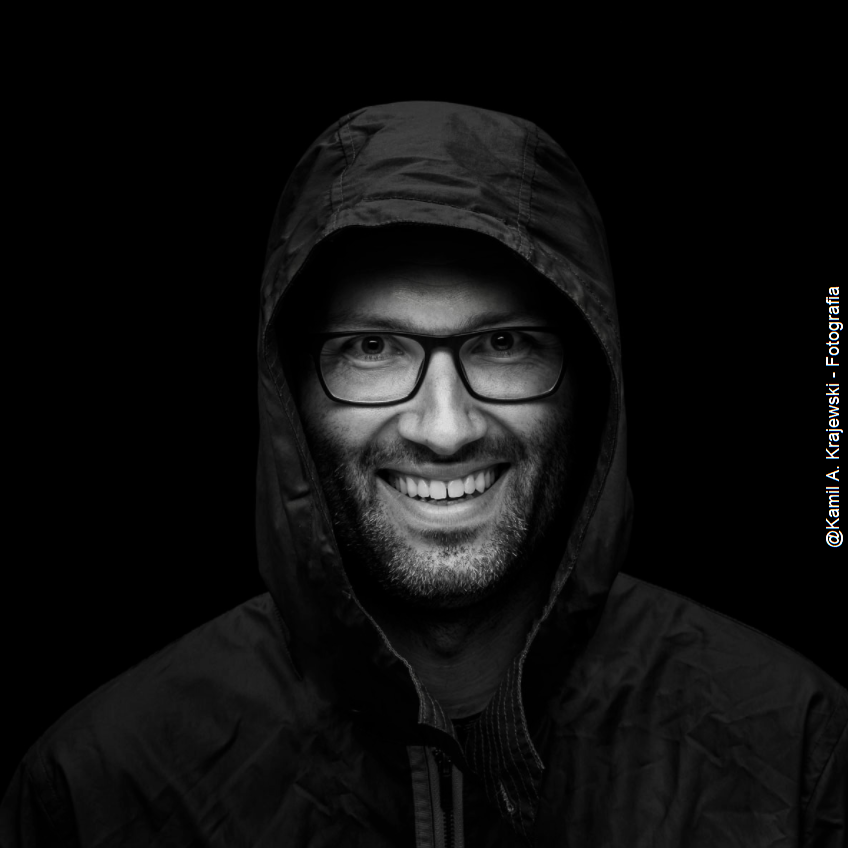
Read Kamil Krajewski’s impressions of using VideoLED 1000 lights on a professional assignment.
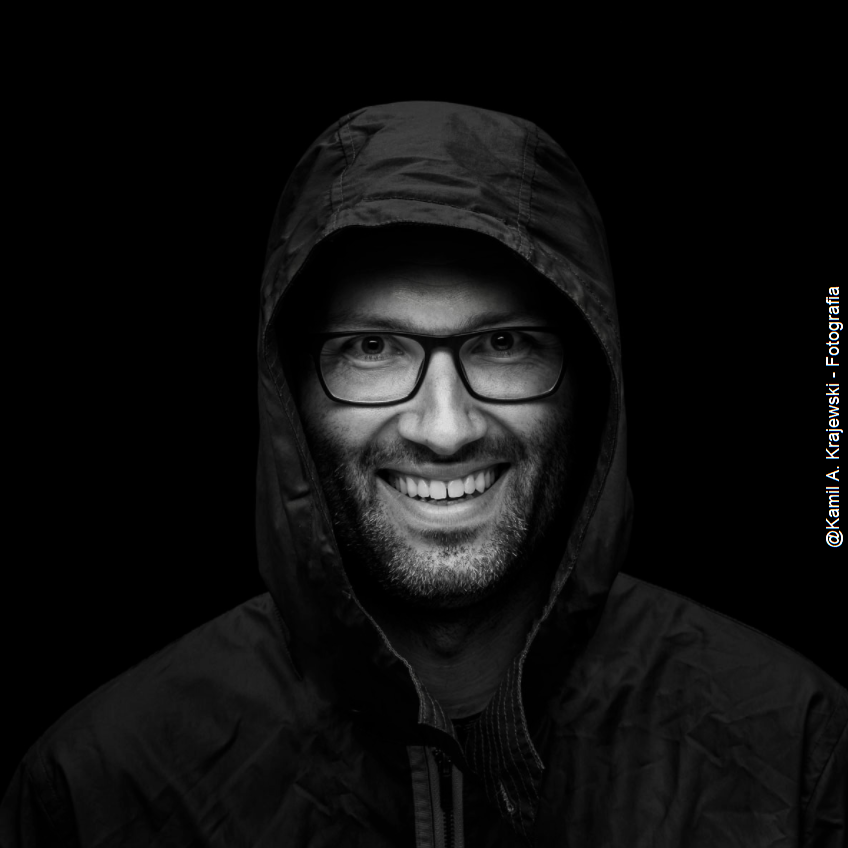
One of my regular clients always gives me projects that are both a challenge and an adventure. I love combining work with travel. For them I have photographed platforms used to transport Airbus fuselages in Brittany, made a two-day timelapse of a huge gantry installation at an aluminium plant in the Alps, and visited Amazon logistics centres and a modern waste-sorting facility near Paris. Their assignments mean travel, interesting people, technology and machinery — subjects I genuinely enjoy.
Recently they commissioned video material from a food-industry factory. I brought two Quadralite VideoLED 1000 lights and here are some observations.
First of all, the lights are lightweight. Even with the stands extended to maximum height I did not feel the need for sandbags. I was working alone in closed rooms, so the stands remained stable. The building had four floors and I was carrying a lot of equipment, so I used a trolley — something I now consider indispensable.
For photography I use softboxes with interchangeable mounting rings. A major advantage of LED technology is that the lights remain relatively cool, allowing me to use my photographic modifiers thanks to the Bowens mount.
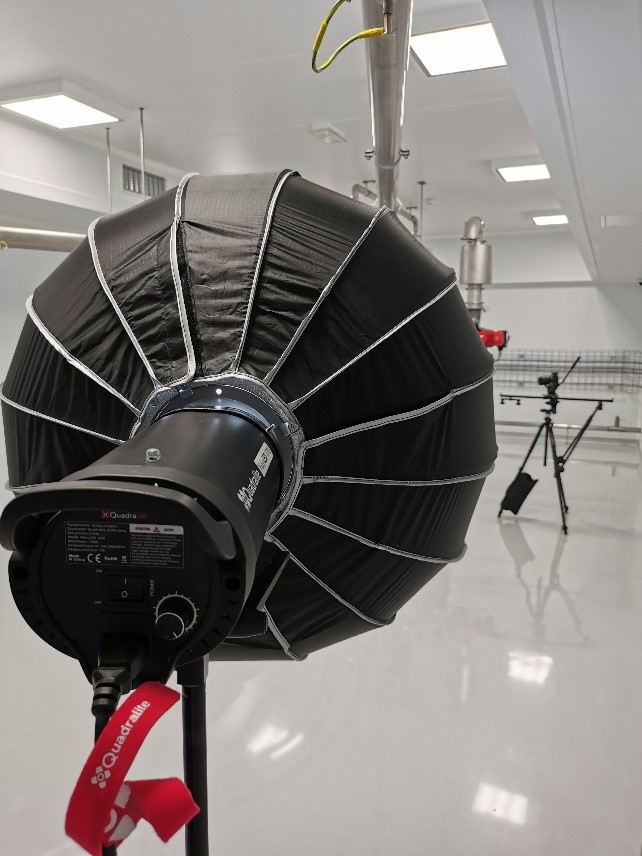
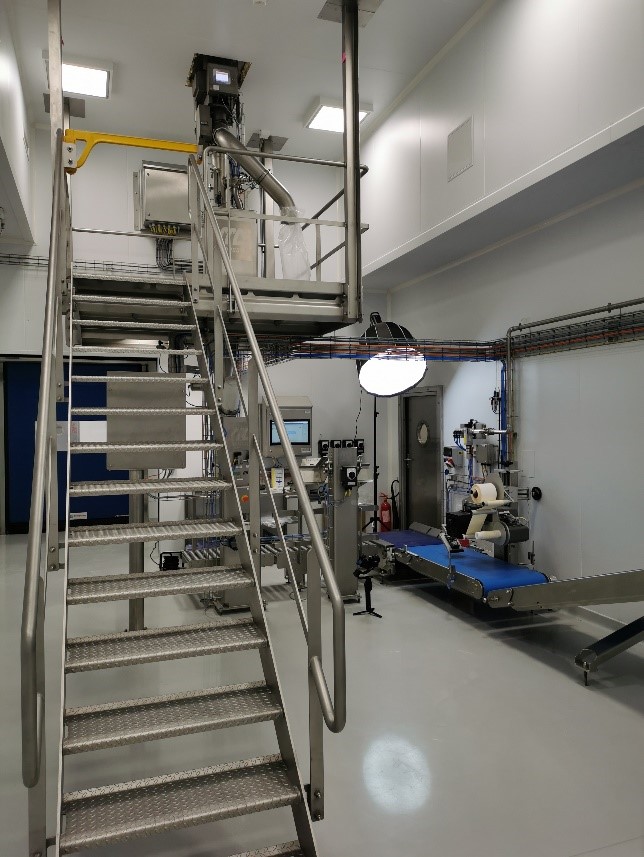
In areas where I was filming at 50 fps, 1/100 s and apertures around f/4–f/6.3 in S-Log3 at ISO 800, the Quadralite VideoLED 1000 units worked well as gentle fill lights with an 80 cm octabox and one diffusion layer. The supplied reflector preserved more output, but I wanted exceptionally soft light; bouncing from walls or the ceiling reduced intensity too much. The existing light in the rooms turned out to be fairly strong.
The lights were most useful in tighter frames and smaller scenes, and they also helped when I worked at smaller apertures. I planned to test them next at close distances with people.
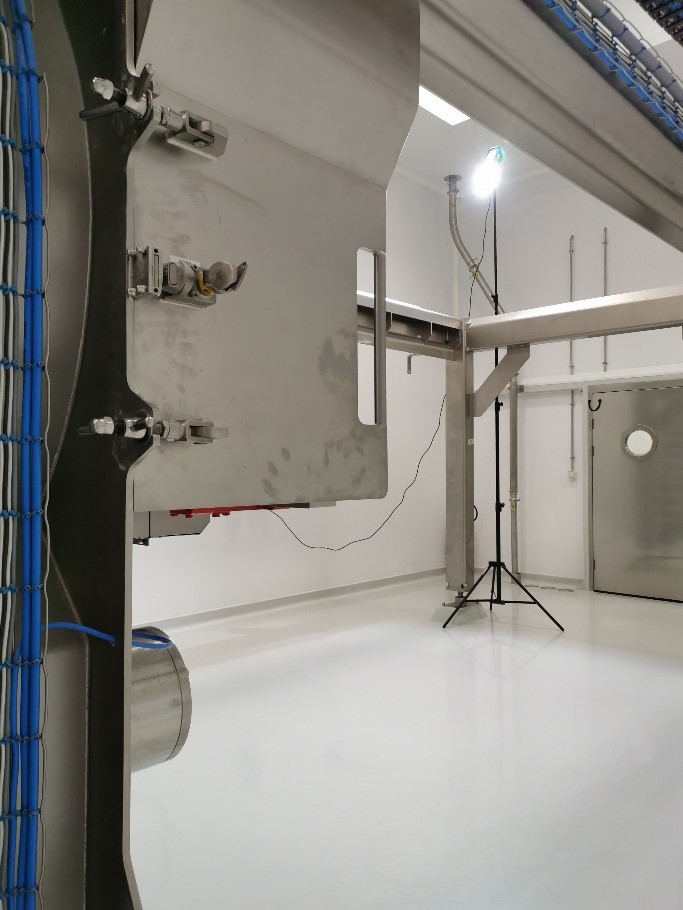
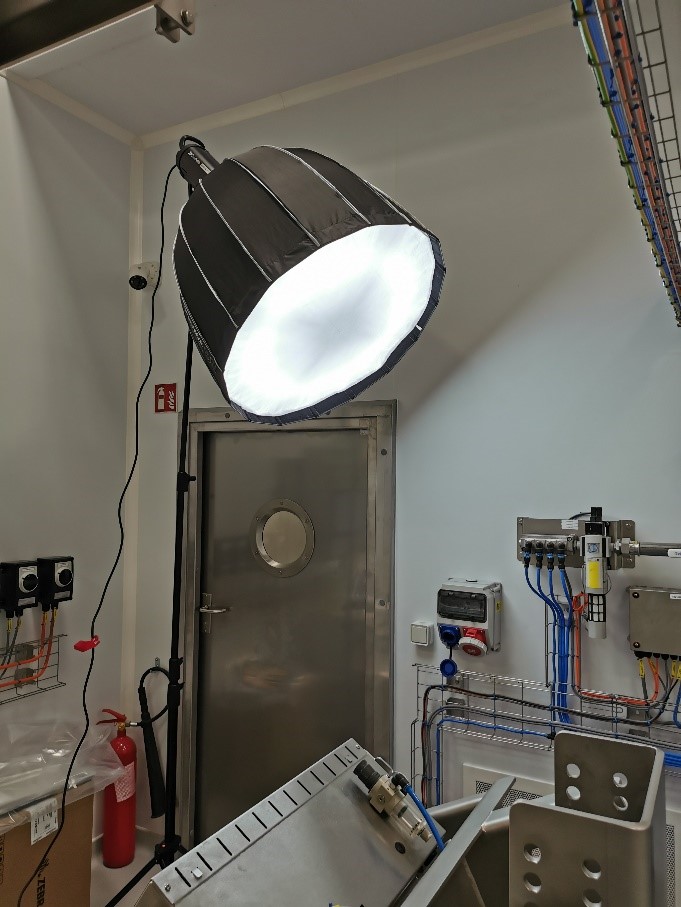
I started at 8 a.m. and finished at 7 p.m. I normally try to keep shooting days to around eight hours, but the engineer hosting me was leaving for another site the next day. The following morning I was up at 5 a.m. and captured a few drone shots at 6:20. It was overcast and after 35 minutes it began to rain — despite a very different forecast.
Returning to the Quadralite VideoLED 1000: I am glad I brought them. Their functionality fully met my expectations.
Learn more about Quadralite products
and discover photographer Kamil Krajewski.